
How Huck Fasteners Helped Win World War 2
Much has been said about the role U.S. manufacturing played in the Allied victory in World War 2, but the focus tends to be on the outputs (ships, vehicles, fighter planes, bombers) or the people on the homefront who built this equipment. But much like today, we don't stop to consider the fastening systems that held all that equipment together.
None of that war materiel would be possible without some method of joining structural components. And the story of how engineered joining systems sped up wartime production holds lessons for modern manufacturing.

US War Production poster, ca. 1942-1943 from the National Archives
When the Japanese attacked Pearl Harbor on December 7, 1941, the United States was brought into a war it hadn’t wanted. The first World War had ended just over twenty years before, and with over 100,000 dead in that conflict, most Americans felt the country should stay out of European conflicts.
But the United States had only recently begun to heal from the Great Depression, which saw the loss of millions of jobs and a sharp decline in industrial production worldwide. If war was upon the country, she would been to build up her armed forces and ramp up war production. The “bomber boys” who fought the air war in Europe in the early days of WWII were some of the first to feel the pressure. Sustaining heavy losses during daylight bombing raids, squadrons flew under strength or with hastily repaired aircraft. It was the same story in the Pacific, with critical needs for more equipment for the Army, Navy, and Marine Corps as they fought immense battles at sea and on distant islands.
The United States, Britain, Russia, and the other Allies needed more if they were going to have a chance at winning, more of everything from food to supplies to equipment.
The Seed of a Revolutionary Idea
On October 7, 1944, President Franklin D. Roosevelt said of the Allied armies, “These men could not have been armed and equipped as they are had it not been for the miracle of production here at home.”
Founder of Huck Manufacturing Company, Louis C. Huck, was one of the people responsible for this staggering improvement in manufacturing efficiency.
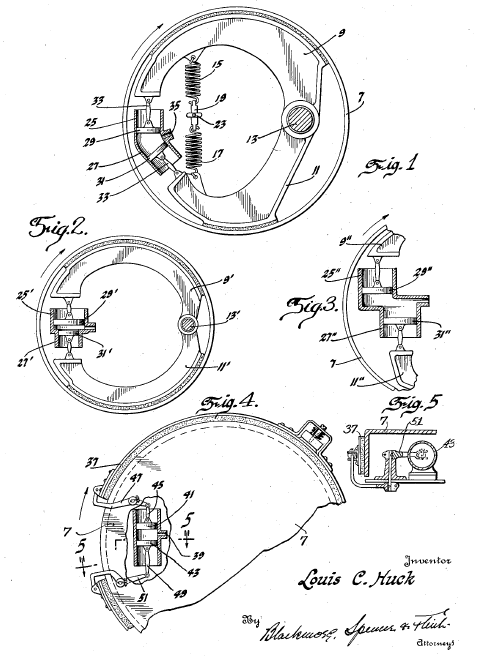 Patent drawing of the Huck Brake
Born just after the automobile was invented, Huck already had a reputation for process improvement and innovation. His Huck Brake was patented in 1926 and became widely used in General Motors cars for decades. At the time, GM was in a partnership with Fokker Aircraft Corporation of America to produce Dornier airplanes in the United States. Production speed was an issue and GM was looking for ways to improve manufacturing output of Dornier aircraft.
 Photograph of a Dornier flying boat by Photo by Klaus Kreuer on Unsplash
Not only had Lou Huck already revolutionized GM’s braking systems, he knew airplanes. The company decided he was just the man to identify production bottlenecks, and they sent him to investigate.
Huck quickly identified a major bottleneck in the manufacturing process. The skin of the aircraft was fastened to the frame with buck rivets. Not only did this joining process require skilled labor, buck riveting could take anywhere from two to four skilled workers to install each rivet. It was slow and expensive work.
The answer to the production challenges at Dornier was twofold: Find a faster way to securely fasten the structure and improve the labor pool by finding a fastening method that could install reliably with unskilled labor.
Lou had just the idea. He imagined a fastener that was strong enough to withstand the tensile force and sheer force the airplane would experience, but could be installed by a single person from a one side of the structure.
A Critical Need for Increased Production
Unfortunately, the Great Depression meant the end of the golden age of air travel and Lou didn’t get a chance to try out his final idea at Dornier. Fortunately, he didn’t give up. He developed a single-sided fastener that could be easily installed with a pneudraulic tool. This Huck structural blind rivet was patented in 1936.

Archival photo of an early Huck® structural blind fastener
Confident in his product’s future success, Lou began manufacturing structural blind rivets in a small building on Wight Street by the Detroit River in 1939. Huck® Manufacturing Company was incorporated the next year, in 1940. And not a moment too soon.
World War II was fully underway in Europe, and the French and British needed equipment. After the Allied evacuation of mainland Europe at Dunkirk in 1939, followed rapidly by German aerial bombing in the Battle of Britain in the summer of 1940, the Allies were in desperate need of aircraft.
Winston Churchill in particular had been pressuring the United States to provide those aircraft (and other equipment). It was a difficult request to fulfill – and not just because the U.S. was digging out of the Great Depression and had been following a policy of isolationism since the end of World War I. Public sentiment began to change after Germany invaded Poland and there was growing support for the U.S. to provide aid to the Allies.
The bigger problem was that the United States simply wasn’t producing at a rate that would satisfy the needs of wartime Britain. Aircraft production numbers alone tell the story. In 1939, the United States produced only 1,400 airplanes. To put those numbers in perspective, it is estimated that the British Royal Air Force lost as many as 1,700 aircraft during the four months of the Battle of Britain the following year.
It was going to take innovation to find a way of producing enough aircraft to not just replace RAF wartime losses but to build up U.S. military readiness. Someone somewhere must have learned about Huck’s structural blind rivet because he was one of the innovators that was called in to help.
When Speed of Installation Matters
The B-17 Flying Fortress might be one of the most recognizable images of the second World War, thanks to movies like 12 O’clock High, Memphis Belle, and the new Apple TV+ series Masters of the Air, but when Great Britain declared war on Germany, the United States could only field 198 of the iconic Flying Fortress.
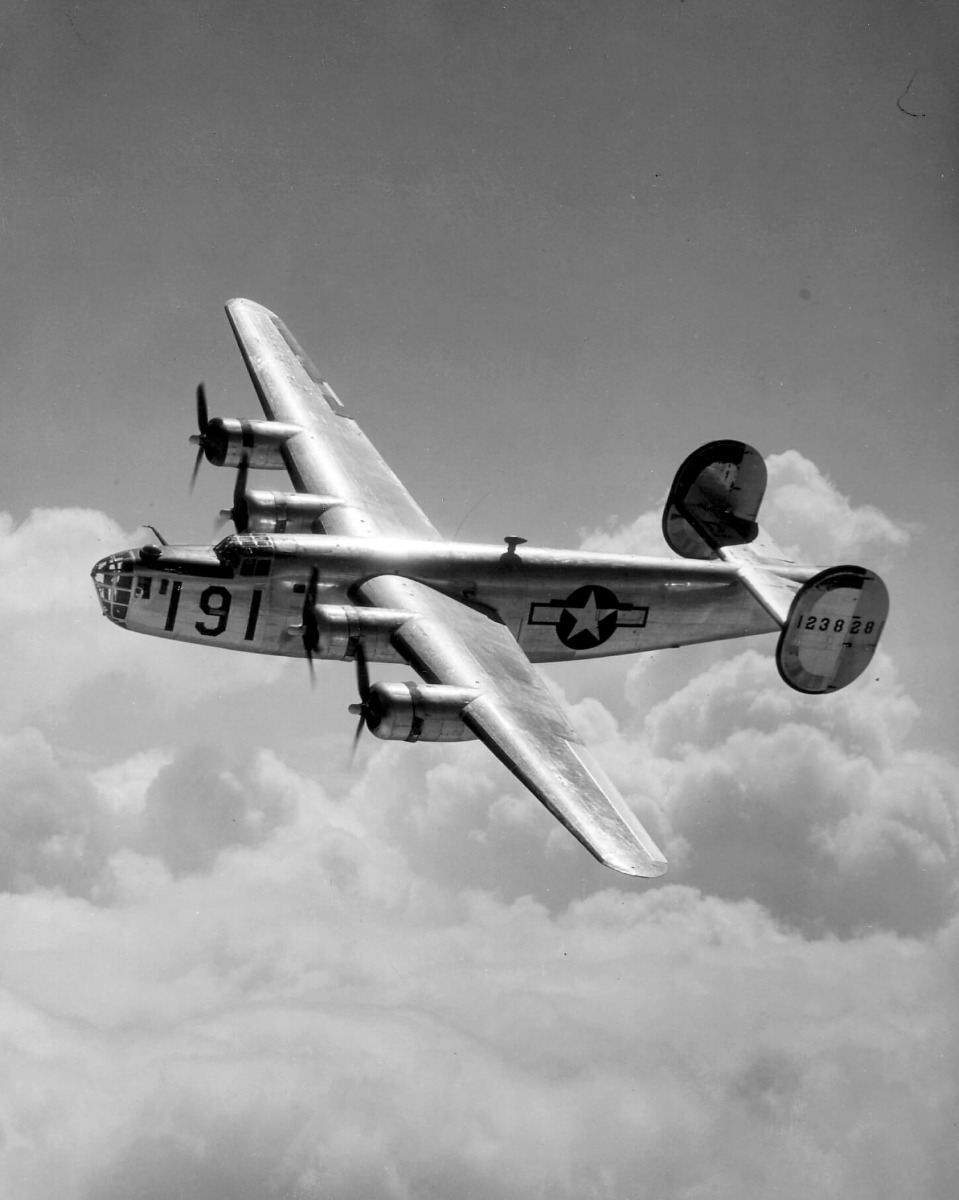 Photograph of a B-24 Liberator bomber from Maxwell Field
The situation was not much better for the B-24 Liberator bomber, another heavy bomber that proved critical to the war effort. Developed in the late 1930’s, the Liberator could fly at different altitudes and speeds than the Flying Fortress.
The British and French governments ordered B-24 bombers before the prototype was even complete. Though France fell to Germany before their order could be filled, the British took their first deliveries, totaling 48 B-24s, in 1941, primarily to protect critical shipping lanes in the Atlantic.
Though the US had not yet entered the war, the U.S. military was also trying to build up its forces at this time. The pent-up demand of both the US Army Air Corps and the British RAF meant there were more orders for airplanes of all kinds than factories could produce.
Maybe it was his factory location in Detroit that got Lou Huck’s one-sided structural rivet noticed by the engineers at Ford’s Willow Run plant. He may have worked with one of them before. The Liberator design, with wings mounted high on the fuselage, bears a striking resemblance to the flying boats he would have seen at Dornier during his days with General Motors.
However it happened, the Huck® blind fastener was a game changer for airplane manufacturing. The first precision-engineered Huck® blind rivet was installed on a B-24 Liberator bomber at Ford’s Willow Run plant in the summer of 1943 and by the end of that year, they were installed on every B-24 that came off the Willow Run line.

Archival photo of woman installing Huck fasteners, believed to be at the Willow Run plant
It’s easy to see why the Huck® rivet was adopted so quickly. With so many Americans training or serving overseas, labor was at a premium. By allowing the components of the aircraft to be fastened from only one side, instead of needing two people to install, the Huck® blind fastener allowed Ford to better utilize its labor force.
It was also fast to install a Huck® rivet, and with hundreds of fasteners in a B-24, this speed of installation was almost certainly a crucial part of the output from Willow Run.

Photograph of a B-24 production line at Willow Run, from the National Archives
The Willow Run plant became an example of how innovation bred efficiency in production. In its first year of operation, the plant produced 56 Liberators. The following year, 1943, started off slow, but the installers at Willow Run soon hit their stride. On November 3, 1943, the 1,000th Willow Run B-24 bomber came off the production line.
By the end of the war, Willow Run was the fastest of the five B-24 production facilities, with one bomber rolling off that line every hour. It was a staggering accomplishment.
Successful Implementation of Efficient Production
In the early days, Allied air crews suffered 77% casualties in Europe, exacting a toll that is illuminated in the stories of the “Bloody 100th” bomb group and many others. It is difficult to pinpoint just how many planes were lost in World War 2 but a heartbreaking memorial at the Imperial War Museum – Duxford lists RAF losses at 8,325 planes and US Army Air Forces losses in the European theater at 7,062 planes. All told, it is believed that the USAAC lost around 65,000 planes in combat and in training.

Counting the Cost memorial at the Imperial War Museum Duxford
Replacing lost aircraft was crucial for combat effectiveness in the Pacific, with its great naval battles and distant island battlegrounds. In Europe, achieving air superiority was a must-do preparation for a land invasion on D-Day.
The B-24 was a crucial part of the strategy in both theaters of war. It was less expensive to produce than the B-17 and the next generation B-29 Super Fortress. It was used by the Royal Air Force, the US Army Air Corps in Europe, the Mediterranean, and the Pacific, the US Navy, and for pilot training in the United States. All told, roughly half of the World War 2 bomber fleet was made up of the Liberator. Production of this bomber became so efficient that all but two of its manufacturing plants were shut down or repurposed for other uses by the war ended.
And we know the result. The Allies went on to win the air war in Europe, storm the beaches of Normandy on D-Day, and force the surrender of Nazi Germany. The war in Pacific was also a victory, with peace declared on September 2, 1945.
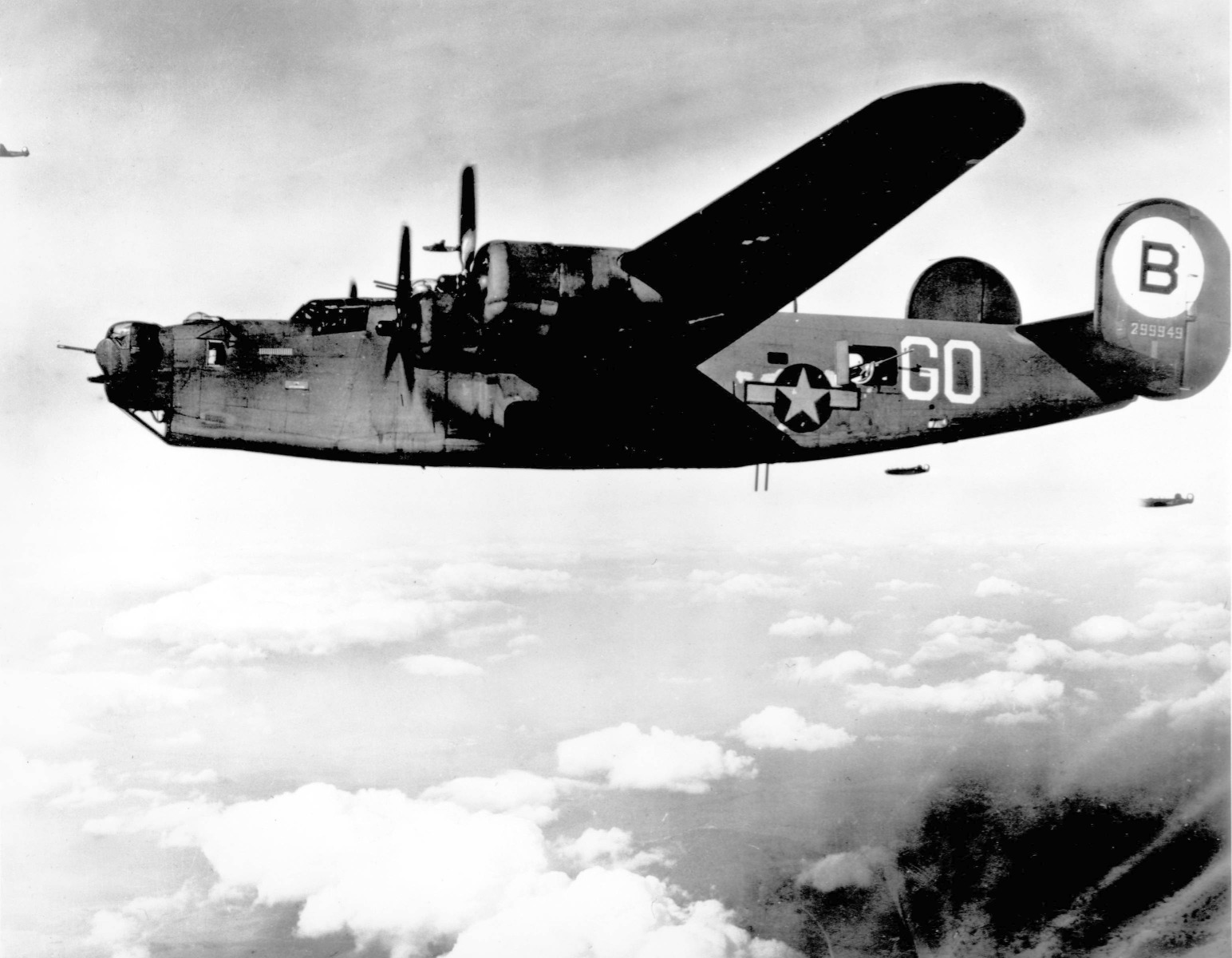
Photograph of B-24 Bombers over Friedrichshaven, Germany
Victory would not have been possible without the astounding growth of American manufacturing. “This is the end for Germany,” Major Werner Pluskat of the German 352nd Infantry said when he saw the armada at D-Day. Thousands of ships, boats, and aircraft supported the Normandy landings that day, a feat unknown to history.
Many of the men and women who helped build that equipment are lost to history. But their sweat and muscle, their determination to find a better way to do things – these were the attributes that helped win the war. It’s thanks to innovative people like Lou Huck that the Americans were able to ship food and supplies across the Atlantic, were able to rebuild their strength after the bombing of Pearl Harbor, and were able to rule the skies over Germany.
The Legacy of Louis C. Huck
Huck’s legacy didn’t end with the war. It was just beginning. Huck® Manufacturing continued to grow after the end of the war, expanding into new industries like rail, shipbuilding, school buses, mining, trailers, trucks, and green initiatives like wind and solar.
A lot has changed at Huck® Manufacturing in 80+ years, but one thing has stayed constant. What we make here isn’t just fasteners. We move freight across the world in rail cars, trucks, and trailers. We help feed the world. We get kids to school safely. And we're still just getting started.
The legacy of Louis C. Huck – the man who helped win a world war – is in our DNA. It’s how we make the strongest, most trusted fastening solution in the world. That makes us proud as Huck®.

Frequently Asked Questions
What is a blind rivet?
A blind rivet is a fastener that can be installed from one side of a joint. They are commonly used to fasten different types of materials, are vibration resistant, and offer consistent, reliable installation that prevents over-tightening and stripping. There are a variety of both non-structural and structural blind fasteners available.
How do blind fasteners work?
Blind fasteners install with specialized tooling systems to achieve a mechanically locked joint. This is achieved by pulling the pin from the access side of the joint, deforming the sleeve on the blind side and forcing the joined materials together. For more information, or to see an animation of the process, click here.
How do blind fasteners help improve throughput in manufacturing?
Because they install from one side of a joint, blind fasteners can save significant time during the joining of elements in an assembly process. This directly impacts the amount of time required to finish assembling the product, and often means a manufacturer can produce more product.